
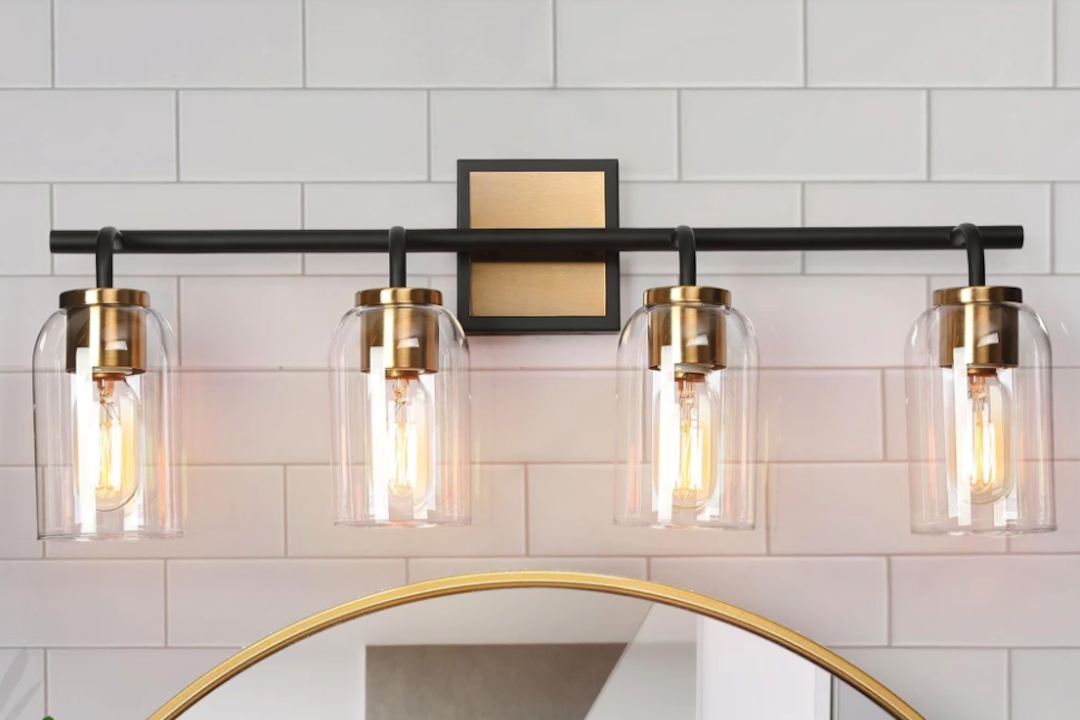
Modern bathrooms often employ specific aesthetic choices to create a desired ambiance. One such combination gaining prominence is the use of black and gold vanity fixtures for lighting. This article explores the design principles, practical considerations, and various applications of these fixtures.
The pairing of black and gold in interior design is not new; it has historical roots in various art movements and decorative styles. In the context of modern bathroom lighting Miilighting, this combination offers a distinct visual language.
Contrasting Elements and Visual Impact
Black, as a color, offers a sense of weight, definition, and sophistication. It acts as a grounding element, absorbing light and providing a strong silhouette. Gold, conversely, is associated with luxury, warmth, and opulence. It reflects light, drawing attention and adding a luminous quality. When brought together, these two colors create a dynamic contrast. The black provides a backdrop against which the gold accents can truly shine, much like stars against a night sky. This contrast prevents either color from becoming monotonous and instead fosters a visually engaging experience. Imagine a dark stage (the black) with a spotlight on a captivating performer (the gold). This interplay is central to their appeal.
Modern Design Sensibilities
While black and gold have historical precedents, their application in modern bathroom lighting often deviates from ornate, traditional styles. Contemporary designs tend to favor clean lines, geometric shapes, and a minimalist approach. This translates to fixtures that are sleek and understated, allowing the material and color combination to speak for itself. The modern aesthetic often seeks to convey luxury through subtlety rather than overt embellishment. For example, a simple cylindrical black vanity light with a thin gold band might be preferred over a heavily detailed, filigreed gold fixture.
Versatility in Interior Styles
Despite their bold appearance, black and gold fixtures can integrate into a surprising range of bathroom interior styles. While they naturally complement contemporary and transitional designs, they can also add an unexpected element to industrial or even some carefully curated farmhouse aesthetics. The key lies in the specific design of the fixture itself and the overall coherence of the bathroom’s other elements. A rugged, black metal fixture with subtle gold detailing might work in an industrial setting, whereas a more polished, minimalist design would be better suited for a modern space.
Types of Black and Gold Vanity Fixtures
Vanity lighting encompasses various forms, each offering distinct functionalities and aesthetic contributions. Understanding these types is crucial when selecting fixtures for your bathroom.
Wall-Mounted Sconces
Wall-mounted sconces are a popular choice for vanity lighting. They are typically positioned on either side of a mirror or above it, providing direct illumination to the user’s face. In a black and gold configuration, sconces can take various forms.
Up-and-Down Lights
Some sconces direct light both upwards and downwards, creating a diffused ambient glow as well as task lighting. Black sconces with gold interior reflectors or gold-finished arms can enhance this effect, casting a warm light onto the wall and vanity area.
Single vs. Multi-Light Sconces
Sconces can feature a single light source or multiple bulbs arranged on a fixture. Multi-light sconces in black and gold often incorporate individual black lamp holders with gold accents or a black bar holding several gold-rimmed shades. The choice depends on the desired level of brightness and the width of the vanity.
Bar Lights
Bar lights, also known as vanity strips or linear fixtures, consist of multiple light sources arranged along a horizontal bar. They are typically installed above the mirror, providing even illumination across the entire vanity area.
Integrated LED Bars
Many modern black and gold bar lights feature integrated LED technology. This allows for sleek, low-profile designs where the light source is seamlessly incorporated into a black housing with gold end caps or accents. LED technology also offers energy efficiency and a long lifespan.
Exposed Bulb Designs
Alternatively, some bar lights feature exposed bulbs, often with a clear or frosted glass shade, set within a black metal framework accented with gold. This style can evoke a slightly industrial or vintage aesthetic while still maintaining a contemporary feel. The type of bulb (e.g., Edison bulbs for a vintage touch or globe bulbs for a softer glow) further dictates the aesthetic.
Pendant Lights
While less common directly as vanity lighting, pendant lights can be used effectively in specific bathroom layouts, particularly with larger vanities or as an accent. They hang from the ceiling, directing light downwards.
Individual Pendants
Small, individual black and gold pendant lights can be suspended on either side of a mirror, offering a more decorative and sometimes less intrusive alternative to sconces. The gold interior of a black pendant can cast a particularly warm and inviting light.
Cluster Pendants
In larger bathrooms, a cluster of black and gold pendants at varying heights above a freestanding vanity can create a dramatic focal point. This approach is more about creating ambiance and visual interest than primary task lighting.
Practical Considerations for Installation
Beyond aesthetics, several practical factors influence the selection and installation of modern black and gold vanity fixtures. Ignoring these can lead to suboptimal lighting or even safety hazards.
Illumination Levels and Color Temperature
The primary function of vanity lighting is to provide adequate illumination for grooming tasks. The quantity of light (lumens) and its color temperature (Kelvin) are critical.
Lumens for Task Lighting
For effective task lighting at the vanity, generally, a total of 1500 to 2000 lumens is recommended for an average-sized bathroom. This can be achieved through multiple bulbs or a single, powerful fixture. When choosing black fixtures, remember that black can visually absorb some light, so ensure the light source itself is sufficiently bright.
Color Temperature (Kelvin)
Color temperature impacts how colors appear and the overall mood of the bathroom. For vanity lighting, a color temperature between 2700K (warm white) and 4000K (cool white) is typically preferred. Warm white (2700K-3000K) creates a softer, more inviting atmosphere, while cool white (3500K-4000K) provides better clarity for tasks like applying makeup. Consider whether the primary goal is a spa-like ambiance or functional clarity.
Placement and Spacing
The positioning of vanity fixtures significantly affects light distribution and shadow creation. Incorrect placement can lead to unflattering shadows on the face, making grooming difficult.
Side-Mounted Fixtures
When using sconces on either side of the mirror, they should ideally be mounted at eye level (approximately 60-65 inches from the floor) and spaced about 28-36 inches apart. This creates cross-illumination, minimizing shadows on the face. If your black and gold fixtures are wide, adjust spacing accordingly to prevent them from encroaching on the mirror.
Overhead Fixtures
Bar lights or fixtures mounted above the mirror should be centered and positioned high enough to illuminate the entire face without casting harsh shadows from above. A common rule of thumb is to place overhead fixtures about 75-80 inches from the floor, or approximately 6-8 inches above the top edge of the mirror.
Dimmer Compatibility and Controls
The ability to adjust the intensity of light is a valuable feature in any bathroom. Dimmer switches allow users to transition from bright task lighting to a softer, more relaxing ambiance.
Benefits of Dimmers
Dimmers enhance the versatility of black and gold vanity fixtures, allowing them to serve multiple purposes. A bright setting is suitable for morning routines, while a dimmed light can create a calmer atmosphere for evening relaxation. Ensure that the chosen bulbs and fixtures are compatible with dimmer switches.
Smart Home Integration
For a truly modern bathroom, consider integrating lighting with a smart home system. This allows for voice control, scheduling, and custom lighting scenes, further enhancing the functionality and luxury of black and gold fixtures.
Materials and Durability
The materials used in black and gold vanity fixtures are as important as their design, particularly in the humid environment of a bathroom. Durability and maintenance should be key considerations.
Finishes and Coatings
The black and gold elements in these fixtures are typically achieved through various finishes and coatings applied to a base metal.
Matte Black vs. Brushed Black
Matte black offers a sophisticated, non-reflective finish that can absorb fingerprints less visibly than glossy black. Brushed black provides a slightly textured, understated look. The choice depends on the desired level of subtlety and how the finish interacts with other elements in the bathroom. These black finishes are often powder-coated or electroplated for resilience.
Brushed Gold vs. Polished Gold
Gold finishes can range from brushed (satin) to polished (mirror-like). Brushed gold offers a softer, more contemporary appeal, often appearing less flamboyant. Polished gold provides a highly reflective, luxurious sheen. The durability of gold finishes depends on the application method; PVD (Physical Vapor Deposition) coatings are known for their exceptional resistance to tarnishing and scratching, making them ideal for high-humidity environments.
IP Ratings for Bathroom Zones
Bathrooms are divided into various zones based on their proximity to water sources. Lighting fixtures must have an appropriate Ingress Protection (IP) rating for the zone in which they are installed.
Zone Awareness
Generally, vanity fixtures, being further from direct water spray (like inside a shower or above a bath), often fall into Zone 2 or outside of defined zones. For these areas, an IP44 rating (protected against solid objects over 1mm and splashed water from any direction) is often sufficient. Always consult local electrical codes and the manufacturer’s recommendations. Placing a non-IP-rated fixture too close to a water source can pose a safety risk.
Integrating Black and Gold with Bathroom Decor
The effectiveness of black and gold vanity fixtures is maximized when they are thoughtfully integrated into the overall bathroom design. Their presence should complement, not clash with, other elements.
Complementary Color Palettes
The colors of walls, tiles, and vanity cabinets play a significant role in how black and gold fixtures are perceived.
Neutral Backdrops
White, gray, and beige walls provide a neutral canvas that allows black and gold to stand out without competing for attention. This creates a balanced and sophisticated look. A crisp white bathroom with black floating vanity and gold hardware, accented by black and gold lighting, exemplifies this.
Darker Tones
In bathrooms with darker wall colors, such as deep blues or greens, black and gold fixtures can enhance the sense of drama and luxury. The gold acts as a bright counterpoint to the darker hues. Ensure there is enough ambient lighting to prevent the space from feeling too dim.
Pairing with Hardware and Accessories
Consistency in metallic finishes helps to create a cohesive and polished look.
Matching Finishes
Ideally, the gold finish on your vanity lights should either perfectly match or harmoniously complement the gold finishes on other bathroom hardware, such as faucet, showerhead, towel bars, and cabinet pulls. A mix of vastly different gold tones can detract from the overall aesthetic. If you opt for brushed gold fixtures, consider brushed gold for your faucet.
Contrasting Elements
While matching is generally preferred, a subtle strategic contrast can also work. For instance, if the vanity light has prominent black elements with minimal gold accents, pairing it with predominantly black hardware (e.g., a matte black faucet) can maintain visual interest while grounding the design. The gold in the fixture then becomes a more precious, standout detail.
Mirror Selection
The mirror itself is a crucial element that interacts directly with vanity lighting.
Framed Mirrors
A black-framed mirror can anchor the black elements of the lighting fixtures, while a gold-framed mirror can echo the gold accents. A thin, minimalist frame in either black or gold maintains a modern aesthetic.
Backlit Mirrors
For an enhanced lighting effect, consider a backlit mirror. This adds another layer of diffuse light, reducing shadows and creating a soft, inviting glow that complements the black and gold fixtures. The backlit effect can also highlight the black or gold frame of the mirror itself.
In conclusion, modern black and gold vanity fixtures offer a versatile and impactful lighting solution for contemporary bathrooms. By carefully considering the aesthetic principles, practical implications of installation, material quality, and integration with the wider bathroom decor, you can harness the dynamic interplay of these two enduring colors to create a sophisticated and functional space. The thoughtful selection and placement of these fixtures can transform a bathroom from a purely utilitarian space into a personal sanctuary where form and function coalesce.