
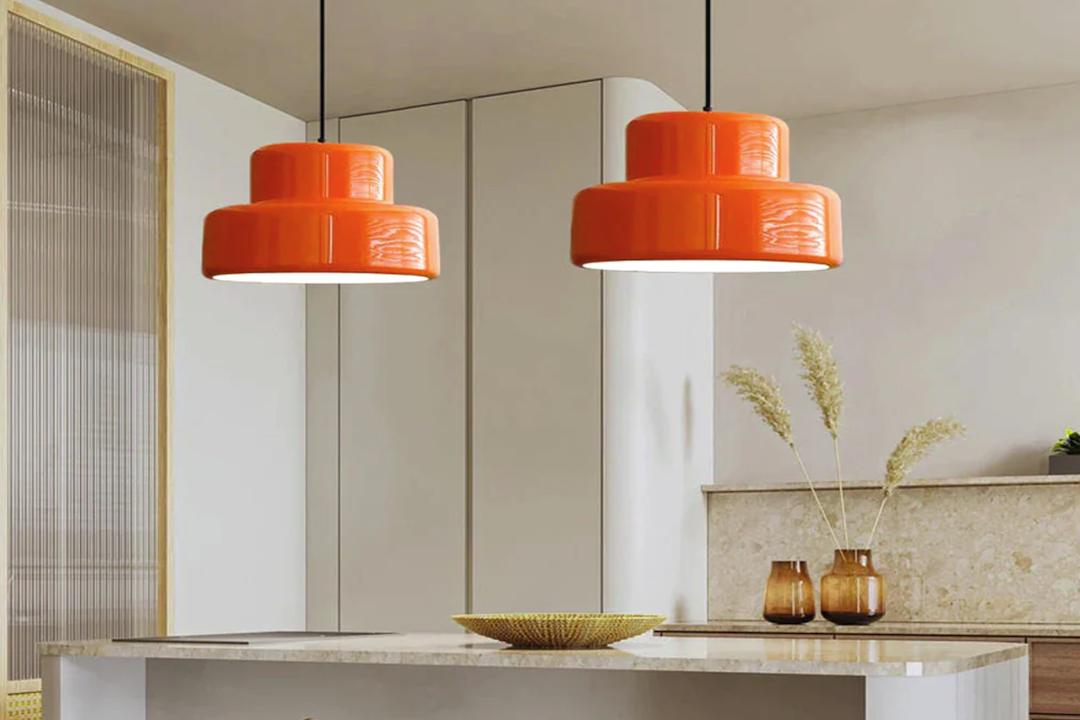
The dining nook, often a compact and utilitarian space within a dwelling, serves as a focal point for daily meals and, in many contexts, informal social gatherings. Its design and ambiance significantly influence the user experience. This article examines the integration of a retro orange pendant lamp as a strategic element in the revitalization of such a space. This specific fixture is not merely an illuminative device; it functions as a design anchor, capable of imparting both historical resonance and modern aesthetic appeal to a dining area.
The selection of a retro orange pendant lamp Drauk implies a deliberate engagement with historical design trends, particularly those prevalent from the mid-20th century. During this period, design shifted from purely functionalism to incorporate more expressive forms and vibrant color palettes.
Mid-Century Modern Influence
The mid-century modern aesthetic, roughly spanning the 1930s through the 1960s, is characterized by clean lines, organic shapes, and a rejection of excessive ornamentation. Materials such as molded plywood, plastic, and chrome were frequently employed. The color orange, in particular, gained prominence, symbolizing optimism, innovation, and a break from traditional, subdued palettes. This period saw a proliferation of pendant lamps with distinct, often geometric, forms and bold hues, designed to be both functional and visually impactful. Many iconic designs from this era, such as those by Poul Henningsen or Verner Panton, exemplify this blend of form and function.
Pop Art Movement and Color Psychology
The Pop Art movement of the 1950s and 1960s further solidified the cultural significance of bright, saturated colors. Orange, with its inherent vibrancy and ability to draw attention, became a staple in art, fashion, and interior design. From a psychological perspective, orange is often associated with energy, enthusiasm, and warmth. Its application in a dining space can, therefore, subtly influence the user’s mood, potentially fostering a more convivial and stimulating atmosphere during meals. The choice of a retro orange pendant lamp is, in essence, an invocation of these historical and psychological currents.
Strategic Placement and Illumination
The effectiveness of a retro orange pendant lamp in a dining nook is heavily dependent on its strategic placement and the quality of light it emits. It is not merely an object to be hung; it is an orchestrator of light and shadow, defining the spatial boundaries and enhancing the visual appeal of the dining area.
Defining the Dining Zone
In an open-plan living environment, where the dining nook may blend seamlessly with other functional areas, a pendant lamp serves as a visual beacon, delineating the dining zone from the surrounding space. Its vertical presence draws the eye downward, anchoring the dining table and chairs as a cohesive unit. This is particularly crucial in smaller nooks where physical barriers are impractical. The lamp acts as an invisible curtain, separating function without impeding flow.
Ambient and Task Lighting Balance
A successful lighting scheme integrates both ambient and task lighting. While the retro orange pendant lamp can contribute significantly to the overall ambient illumination, its primary role in a dining nook is often task-oriented, providing direct light over the dining surface. However, a fixture that casts harsh, undiffused light can be detrimental. Consideration should be given to the lampshade’s material and design, which dictate the diffusion and direction of light. A translucent or perforated shade can soften the light, creating a warm glow that is conducive to relaxation and conversation, rather than a stark, surgical brightness. The color temperature of the bulb also plays a role; a warmer kelvin temperature (e.g., 2700K-3000K) complements the retro aesthetic and enhances the inviting ambiance.
Materiality and Form: A Design Analysis
The physical attributes of the retro orange pendant lamp – its materials, form, and finish – are critical determinants of its aesthetic impact and durability. These characteristics contribute to its role as a design statement within the dining nook.
Construction Materials and Durability
Retro pendant lamps were commonly crafted from a range of materials, each contributing distinct visual and tactile qualities. Metal, often aluminum or steel, was frequently used for its durability and malleability, allowing for the creation of intricate forms. These metals could be powder-coated in vibrant colors, including various shades of orange. Plastics, particularly ABS or acrylic, also gained popularity for their lightweight nature, versatility in molding, and ability to diffuse light effectively. Glass, often opaline or colored, was employed for its elegant translucency and the soft glow it could produce. The choice of material impacts not only the lamp’s appearance but also its maintenance requirements and longevity. A well-chosen material ensures the lamp endures as a functional and aesthetic asset.
Geometric and Organic Forms
Mid-century modern design embraced both geometric precision and organic fluidity. Consequently, retro pendant lamps exhibit a diverse array of forms. Spherical, conical, and cylindrical shapes are common, often appearing as singular forms or as compositions of multiple elements. Lamps with layered shades, such as the artichoke lamp design, create intricate light distribution patterns. Organic forms, inspired by nature, often feature graceful curves and undulating silhouettes, offering a softer counterpoint to more rigid geometries. The form of the chosen pendant lamp should ideally resonate with the existing architectural lines and furniture pieces within the dining nook, creating a harmonious visual dialogue rather than a discordant interruption. A lamp with a strong geometric presence might, for example, complement minimalist furniture, while an organic form could soften a more angular space.
Integrating the Lamp: Cohesion and Contrast
The successful integration of a retro orange pendant lamp into a dining nook requires a nuanced understanding of how it interacts with the existing design elements. It must either complement or strategically contrast with its surroundings to achieve a visually compelling and cohesive outcome.
Color Palette and Thematic Consistency
The vibrant orange hue of the pendant lamp serves as a potent design element. One approach is to integrate it into a pre-existing color palette that includes complementary or analogous colors. For instance, pairing the orange with earthy tones such as olive green, mustard yellow, or muted blues can create a sophisticated retro aesthetic. Alternatively, the orange can serve as a deliberate pop of color against a neutral backdrop of grays, whites, or blacks, providing a focal point and injecting energy into an otherwise understated space. Thematic consistency extends beyond color; if the dining nook features other mid-century modern furniture or accessories, the retro orange lamp reinforces this stylistic narrative. Conversely, in a more eclectic setting, the lamp can introduce a distinct historical layer, creating a dialogue between different design eras.
Furniture Synergy and Scale Considerations
The scale and style of the dining table and chairs are crucial considerations when selecting and placing the pendant lamp. A small, intimate nook might benefit from a singular, appropriately sized pendant that doesn’t overwhelm the space. A larger dining area might accommodate a more substantial fixture or even a cluster of smaller pendants. The lamp’s form should ideally relate to the geometry of the table. A round table, for instance, might be beautifully complemented by a spherical or multi-tiered round pendant, while a rectangular table could be underscored by a linear fixture or a series of evenly spaced individual pendants. The material and finish of the lamp should also harmonize with the furniture; a lamp with chrome accents might resonate with chairs featuring metal legs, for example. The lamp, chairs, and table should coalesce into a unified composition, each element enhancing the others without competing for dominance.
Maintaining and Modernizing the Retro Aesthetic
While the appeal of a retro orange pendant lamp lies in its historical charm, its longevity as a desirable design element is also contingent on appropriate maintenance and, where necessary, judicious modernization. This ensures the lamp remains a vibrant and functional asset within the dining nook.
Cleaning and Care for Vintage Fixtures
Vintage or retro-inspired fixtures, whether original pieces from the mid-20th century or contemporary reproductions, require specific care to preserve their appearance and functionality. The materials used – metal, glass, plastic – dictate the cleaning methods. For metal components, a soft, dry cloth is often sufficient to remove dust. If tarnishing is present on unlacquered metals, a specialized metal polish can restore its luster. Plastic elements can be gently wiped with a damp cloth and mild detergent, avoiding abrasive cleaners that might scratch the surface. Glass shades should be carefully removed (if possible) and washed with warm, soapy water, then thoroughly dried to prevent water spots. Regular, gentle cleaning prevents the buildup of grime and maintains the lamp’s visual appeal. Beyond aesthetics, periodically inspecting the electrical wiring and connections by a qualified electrician is paramount for safety, particularly with older fixtures.
Integrating Smart Home Technology
Despite its retro aesthetic, an orange pendant lamp need not remain technologically antiquated. Modernizing its functionality through smart home integration can enhance convenience and energy efficiency without compromising its visual integrity. This can involve replacing traditional bulbs with smart LED bulbs, which allow for remote control via smartphone applications, voice commands, or integration into broader smart home ecosystems. Smart bulbs offer adjustable brightness (dimming capabilities) and, crucially, tunable white light, allowing the user to modify the color temperature from a warm, inviting glow to a cooler, more task-oriented light, even though the visual light emitted from the lamp shade itself will retain its orange hue. Some smart bulbs also offer a spectrum of colors, though maintaining a consistent white light that works with the orange shade would be recommended for a less distracting effect. This technological upgrade provides a blend of historical design and contemporary functionality, offering granular control over the dining nook’s illumination and ambiance. The orange lamp then becomes not just a static object of design, but a dynamic, controllable element in the smart home.
In conclusion, the retro orange pendant lamp transcends its utilitarian function to become a significant design element in a dining nook. Its historical roots in mid-century modern and Pop Art movements, coupled with its inherent psychological associations, position it as a powerful tool for defining space and influencing atmosphere. Careful consideration of placement, illumination characteristics, material composition, and integration with existing aesthetics will ensure the lamp acts as a cohesive and compelling focal point. Furthermore, prudent maintenance and judicious technological modernization will preserve its charm and enhance its practical utility, allowing it to continue operating as a beacon in the dining space.